Rare Find in Jerusalem: Archaeologists Unearth Charred Wooden Beams from the First Temple’s Destruction


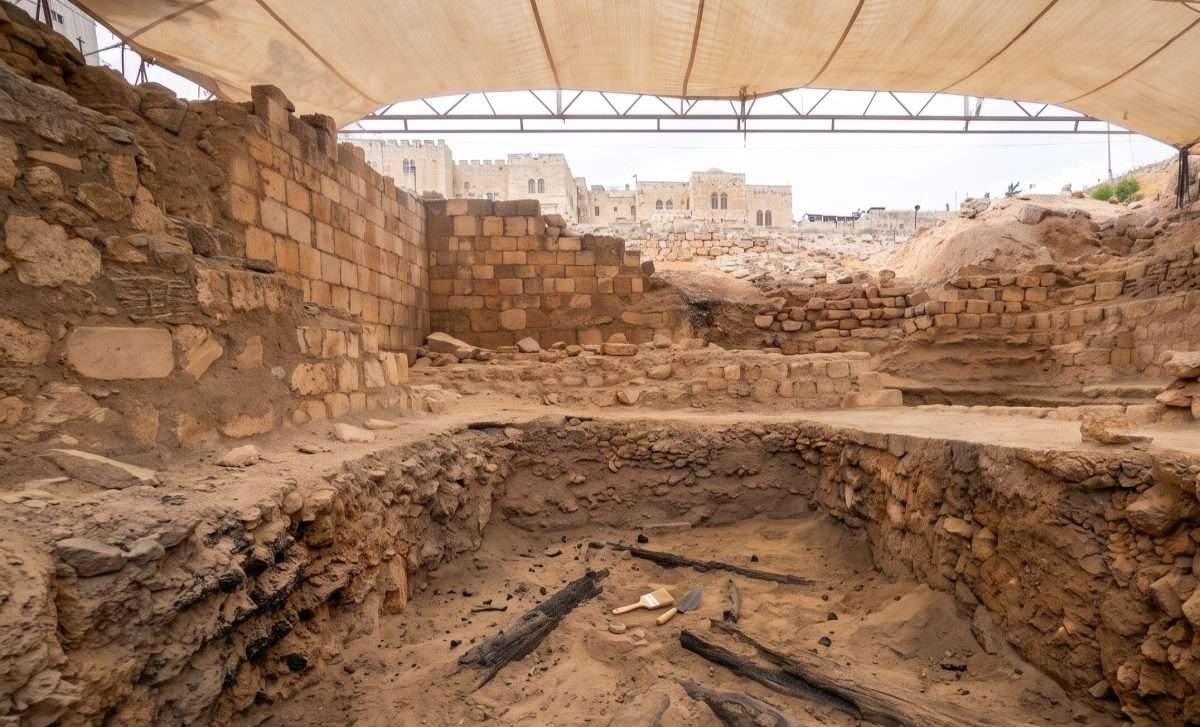
The Israel Antiquities Authority (IAA) and Tel Aviv University have announced a major archaeological discovery in the Jerusalem Walls National Park, located within the historic City of David. During excavations at the Givati Parking Lot site, researchers unearthed a unique collection of charred wooden beams. Scientists have concluded that these fragments date back to 586 BCE—the period of the Babylonian conquest of Jerusalem and the destruction of the First Temple.
Excavation director Efrat Bocher explained that the massive beams most likely supported the roof of a courtyard in a First Temple-era structure. During the massive conflagration that devastated the city, the roof collapsed. Driven by extreme temperatures and structural failure, heavy plaster from the walls crashed down, tightly sealing the burning wood. This debris cut off the oxygen supply, halting the open flames and creating an airtight protective layer around the charred timber. This specific chain of events ensured the incredible preservation of the Iron Age wood for nearly 2,600 years—an exceptional rarity in Levantine archaeology.
Researchers emphasize the high scientific value of the find. Dr. Johanna Regev of the IAA highlighted that the fragments, identified as sycamore and coniferous wood, preserved an unusually high number of tree rings. Combined with advanced radiocarbon dating techniques, this will allow scientists to date the destruction of ancient Jerusalem with unprecedented precision. While previous dating margins of error for similar artifacts spanned centuries, this new data will allow experts to narrow the timeframe to a mere decade.
Excavation co-directors Dr. Yiftah Shalev and Prof. Yuval Gadot stated that the discovery serves as direct, physical evidence of the incredible intensity of the fire and the sheer scale of Jerusalem’s destruction at the hands of the Babylonian army. Notably, the announcement of this historic find was timed just ahead of Tisha B’Av, the traditional day of fasting and deep mourning when the Jewish people commemorate the tragic destruction of both Jerusalem Temples.
